
Showing posts with label CyberSecurity. Show all posts
Showing posts with label CyberSecurity. Show all posts
Sunday, November 20, 2016
Thursday, July 14, 2016
Gresham - In Memory of an Intellectual Giant [8 August 1957 - 2 July 2016]
 |
| John D Gresham Expert on Spec Ops and Intel Ops |
This is another of our Guest Posts,
i.e.,
reprints of articles which are important enough to
rebroadcast to our unique audience in six continents.
The obituary below is particularly significant since John Gresham authored a series of books which were exceptionally accurate, and in some cases, included material from Top Secret/Codeword reports which we assume had been released/declassified for his use by key Pentagon/Intelligence/White House officials.
Since we spent a bit of time with John Gresham in his final years, during which a "mysterious illness" systematically destroyed his health, and finally, his ability to resist infection and his pulmonary functions -- a condition which destroyed his research and writing ability, we wanted to include some ancillary information in this tribute to him by Chuck Oldham.
 |
| Tom Clancy |
We found this detail entrancing since we had been on the Pentagon's Current Intelligence [Soviet] Desk as this true story unfolded only a few years earlier, and we briefed a very small, select group of flag rank officers and Pentagon executives each day of the event. The total number of personnel cleared for those briefs was perhaps 40, and neither Clancy nor Gresham were among them.
But, as we had first hand experience, both analytical and operational in other noteworthy intelligence operations, we were once again surprised to see them recounted, in some noteworthy detail, by Clancy via Gresham's "research"; among those "novels" were Patriot Games and Clear and Present Danger, which were completely accurate with the exception of the juxtaposition of key characters.
 |
| Heart Stoppage Victim |
Clancy died of the Breitbart syndrome known as "heart stoppage", which also took the life of William Colby, former Director of Central Intelligence - who, coincidentally, lived not far from Tom Clancy on Maryland's Eastern Shore.
 |
| Reagan & Walters - Strategists |
Walters and Reagan were masters at the use of such information to expand the focus of intelligent observers and actionable people on actual events which posed a threat to national security. [Walters, by the way, was the real Deep Throat in Watergate]
In reality, both John Gresham and Tom Clancy fall into the national hero category, so, this blog post today pays tribute to two fallen warriors, whose
"pen was mightier than the sword."
-------------------
Click here for original story
[Chuck Oldham (Editor, DefenseMediaNetwork]
Our friend and colleague John D. Gresham died July 2, 2016, after fighting serious health issues for the past several years.
An author, researcher, game designer, commentator and historian, John was well known for his interviews, commentary, research, screenwriting, and production assistance for various documentary series produced for TLC and the History, Military, New York Times, Discovery, and National Geographic channels.

These included Submarine (1993), Armored Cav (1994), Fighter Wing (1995), Marine (1996), Airborne (1997), Carrier (1999), and Special Forces (2001), all published by Berkley Books.
He also was the award-winning co-designer of Supermarina I and Supermarina II (Clash of Arms Games, 1996 and 1997), naval wargames based upon Larry Bond’s award-winning Command at Sea game system.

Beyond Hell and Back (2007, with Dwight Jon Zimmerman), describes seven key U.S. special operations missions.
His last book was Uncommon Valor, covering six Medal of Honor recipients and their deeds in Iraq and Afghanistan, also co-authored with Zimmerman.
He was the consulting editor of The Year in Special Operations for more than a decade, and was an integral part of its growth and success over the years.
John had big ambitions for the publication from the beginning and achieved most of them. He also wrote many stories for other Faircount publications, and was a regular contributor to the Defense Media Network website.
John was a proud and passionate man, and wore his heart on his sleeve with respect to his avocations, his politics, his heroes, and his country. He was an expert on most things military or security-related, but read widely and well, and could discuss a wide range of subjects with authority. He felt privileged to be able to work with and write about the military, and held strong opinions about what shape it should take, as well as about various weapons, strategies, communities, programs, and people.
 |
| Chuck, About That Deadline |
While this often caused enormous stress, I can look back on it now with a smile, because John’s excuses became increasingly creative as the years went by. Equipment failures became old hat, although the old “Didn’t you get my email? I sent that to you” remained a favorite.
Hard drives died, laptops expired, email was hacked. My personal favorites were the acts of God and Mother Nature.
At deadline time, John’s home became the focus of strange and inexplicable phenomena, an uncanny vortex attracting the extremes of weather and chance, where pop-up tornadoes, mini-blizzards, neighborhood flash floods, sudden, violent downpours, and localized windstorms showering tree limbs from the skies could knock out power and communications for days at a time.
I won’t miss tearing my hair out over missing stories when the next deadline comes, but I’ll miss our long conversations about military history, technology, and publishing, our debates over strategy and tactics, and our arguments over politics. John was an outsized personality – fiercely proud, brimming with enthusiasm, a big kid at heart – the world will be a little less colorful without him.
-------
Editorial Note:
John Gresham's final years were filled with pain and agony as he was reduced from a dynamic, healthy guy with an athletic physique, frequently visiting and engaging with Special Operations units, to a faltering, wavering frail body barely able to stand without a cane.
Frequent visits to doctors resulted in their failure to determine the cause of his ailments, the combination of which destroyed him, slowly, shutting down his bodily functions, one by one. No one could figure out his condition, and so all gave up trying.
In retrospect, we presume he had been targeted by the CIA since his research revealed extraordinarily accurate details of actual events of the Intelligence Community, the source of which was likely Bill Colby and Vernon Walters [we worked for both of these men]. His apartment was pillaged after his death, apparently to determine what other secrets he'd gathered and might publish; then again, it was probably "terrorists" and not CIA flunkies.
Until the revelations of Wikileaks, we would not have believed the horror stories about the CIA and DNI since we had been an executive in the Intelligence Community prior to its corruption
[actually, we later learned its corruption dated back to the 1960s, though were were blissfully patriotic and never imagined just how corrupt the IC leadership was (perhaps that was why Colby offered up the Family Jewels to the Church Committee]
Given the Wikileaks revelations, plus the details surrounding Colby's murder, plus the murder of Breitbart, plus the health details of Gresham leading up to his death, we naturally assume CIA murdered him, most likely with their frozen dart gun inflicting multiple viruses into his system.


Friday, October 9, 2015
#DHS Outs #McCarthy
 |
| Elmers and McCarthy -- reportedly closed door sessions were not just political strategy [GotNews] |
Click here for related story [NY Post]
Hmmmmm.
The political game of feints and jabs on the Hill just took a new turn.
The buzz has been over why McCarthy dropped out of contention for the Speakers position, and of course, there's been enough finger pointing to put a few eyes out.
But, the New York Post now reports that allegations of McCarthy's affair with Renee Elmers [R-NC] were the real cause. [Both have denied the allegation.] Normally, we would not repeat such tawdry accusations, but, in this case, due to the circumstances, we'll make an exception.
 |
| [Whowhatwhy.org] |
-- none other than the Department of Homeland Security, which has had more than its share of scandal in recent years.
Seems the perp was unaware that posting to Wikipedia tracks back to the Internet [IP] address of the person/organization posting. In this case, the poster was located in the DHS office in Springfield, Va.
Oops! Call in the Hatch Act police.
[FYI, the Hatch Act outlaws "pernicious political actives"]
This Kabuki drama now takes a decidedly new twist, which will very likely result in an inquiry/investigation/inquisition by both Parties in Congress as to why DHS is slandering politicians via the Media.
It's annoying enough that NSA is eavesdropping on Congress, and that CIA has been spying on Congress, but, heaven forbid, we certainly can't have DHS joining in the political fray of slander, back-stabbing, and innuendo.
These nasty situations inevitably result in a uniting of the political Parties against a common foe -- in this case, the Administration, which may have used a national security organization to slander [expose?] a Congressman.

Now, the search begins for the perp, and who put him/her up to this mischief.
The last iteration of such political engagement by a national security organization resulted in the Church and Pike Committees gutting the Intelligence Community. Will Congress go after DHS with the same zeal?
Sunday, July 12, 2015
Penetrating #CIA
 |
| If you worked for the federal government, all your personal data has been compromised! [fedscoop.com] |
Click here for related story [arstechnica: Sean Gallagher]
The federal government has been opaque about the level of damage inflicted by the data breach at OPM [Office of Personnel Management] -- which holds the personnel files on the majority of employees employed by the federal government. Initially, they estimated only about 10 or 12 million files were accessed; but then, that was revised to about 25 million, but, they weren't sure.
We reckon closer to 50 million, to include all those actively employed as well as all the retired folks who have held security clearances or "positions of trust and responsibility." The two systems breached were the Electronic Official Personnel Folder (eOPF) system, an entity hosted for OPM at the Department of the Interior's shared service data center, and the central database behind "EPIC," the suite of software used by OPM's Federal Investigative Service in order to collect data for government employee and contractor background investigations.
Of course, the personnel files of all the senior career bureaucrats in every federal agency were breached, to include the FBI's background investigations which supported their security clearances. And, let's not forget that, also included were the classified and unclassified files of every elected politician [and their staffers] on Capitol Hill [such were the files that fell into Hillary's clutches for several years, and which magically appeared in her White House bedroom while Bill was President].
Now, each of these folks filled out a Statement of Personal History [SPH], to include names and locations of family members and friends, membership in all organizations, credit card and other bank debt, bankruptcies, and legal history, to include minor and major crimes.
That's a lot of information for bad guys to have in their clutches just for background, but also to hack into at will to target case officers and their families.
But, let's look at what else the bad guys got.
 |
| OPM compromised us! [Bridge of Spies] |
a) CounterIntelligence, which poses a series of questions the subject must answer relating to foreign contacts and relationships. This questioning is limited in scope but is, and has been sufficient to root out spies and double agents in the past in the Spook World.
b) Life-Style, which covers not only foreign contacts and relationships, but also any and all elements of lifestyle, to include unusual sexual proclivities [e.g., homosexuality, cross-dressing, illegal gun ownership, membership in fringe political groups, past or current drug usage, psychiatric care, psychological issues (to include aberrant thoughts, depression, anger, voyeurism, etc.), and past "crimes" [e.g., violations of the Geneva Convention], and basically, anything the polygrapher might dream up.
For the most part, polygraphers in the Intelligence Community are relatively balanced and mature people, and forego many of their more personal prurient interests in their questioning process. But, that doesn't hold true as a rule, since the younger, more eager folk go for the throat and hope they can intimidate their subjects into disclosing issues which can be used for prosecutions -- and thus make a name for themselves as "spy-catchers", or at least vicious intimidators.
Way back when we directed operations for the Defense Clandestine Service [DCS], we encountered one of these nasty creatures and removed him, and subsequently restructured our polygraphs.
As such, we constrained our polygraph question lists to only Counter-Intelligence issues since one criteria for selecting good case officers was that they would have been involved in some form of nefarious activity -- to include criminal acts -- prior [of course] to their entry into Federal/Military Service; the concept being that most clandestine operational activities involve breakage the laws of foreign countries [and occasionally US]. We also didn't want their very first criminal act to occur on the government dime since that risked their 'fessing up if they felt a sudden moral compunction.
 |
| Thunder Road to spy [Moonshiners] |
In some cases, there may even have been violations of the Geneva Convention due to exigent combat circumstances. And, our operations were highly successful; so much so that the Senate Select Committee on Intelligence cited our operational production as exceptional and superior to that of any operations in the Intelligence Community.
[That, of course, was prior to the Clinton Administration, during which the DCS was gutted due to the intercession of the new DCI [Director of Central Intelligence, George Tenet.]
But, we could not convince the CIA to eliminate their Lifestyle Polygraphs; so we made it a policy that our case officers would NEVER agree to a CIA Lifestyle Polygraph [there was one exception by a case officer (a Marine) who unilaterally volunteered; he was later brought up on unrelated court martial charges and it took the intercession of the Commandant of the Marine Corps to arrange for his retirement rather than a court martial].
Our problem with the CIA was that most of their case officers were drawn from two primary sources:
a) Young recruits from the MidWest farmlands before they'd had a chance to commit any significant illegal acts
b) Police officers at local, state, federal or military levels [e.g., ATF, DEA, etc.], or military police, or even analysts.
[A Chief of Station in Central America in the early 1980s was formerly an enlisted Air Policeman whose expertise was limited to writing speeding tickets and whose weaponry expertise consisted of a Colt .38; he was an advisor to the Nicaraguan Contras and sported a Fidel Castro style beard.]
The difficulty in dealing with CIA's Clandestine Service [NCS] was that they thought [and still think] like cops, looking for an arrest rather than a penetration. Worse, once they actually committed a grievous crime, they seemed to become addicted and pushed the envelope to see how much they could get away with before conscience actually kicks in. Today, they bring in SpecOps grunts to conduct interrogations, presuming their effectiveness equates to the volume of shrieking they can induce from torturing prisoners. We doubt they have any trained interrogators, although there was a time when they had the best.
In dealing with the CIA, we often found ourselves countering their law enforcement backgrounds to the detriment of the operations. At times, it was even preferable to work with the FBI agents since they seemed to have a more balanced approach to operational activities -- although only a few had a clue on how to run a counter-intelligence op.
But, we can't condemn the CIA too much since they've had to restructure so many times after Congress either destroyed them directly, or our Presidents appointed idiots such as George Tenet or Leon Panetta as "Directors" but who were actually tools of the cops who had risen to the executive level at the CIA.
But, we digress.
The point of all the blather above is that these data breaches have put at risk our best [and worst] intelligence personnel; and not only the operatives, but the analysts and support personnel who are privy to our most sensitive secrets.
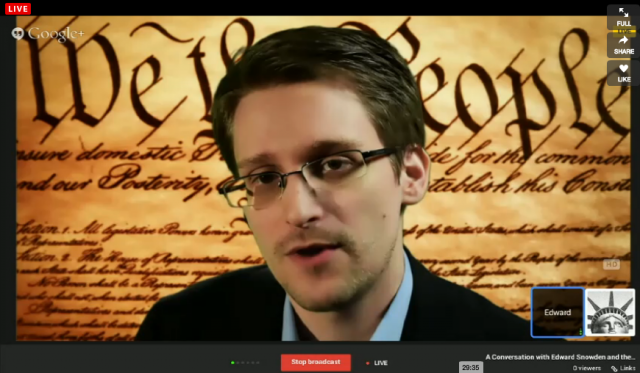
But, here's the kicker.
Who are the hackers?
Were they the Chinese, or the Russkies, or ISIS?
Probably not.
As one NSA exec explained to us 40+ years ago, encryption is a pretty solid process. In order to break the encryption, you have to have at least one end in the clear. And, that requires a human operative who has a key.
How does that operative get the key?
Well, generally, it's a trusted bureaucrat who has the skill sets to understand the encryption and how to access the system. And, those folks are few and far between. So, who are these critters.
Basically, you have to delve back into history [i.e., the 1990s] when the US government demanded that every IT company telecom turn over its encryption keys to the NSA, since otherwise, they couldn't access these files. The companies screamed bloody murder, but, in the end, the US companies acquiesced and gave up their keys.
[The European companies all told the NSA to pound sand, so only the US companies' data was vulnerable, as were the US public.]
Interestingly, the workaround on this process was the companies which provided the "anti-virus security" programs to protect against the hacker "evil-doers". Back in the early 1990s, we were consultants at the Pentagon and advised against having a foreign [e.g., Israel] company supply the anti-virus security programs to "protect" the DOD systems -- most particularly, the DODIIS [DOD Intelligence Information System]. At that time, the Army's Intelligence CIO held a PhD in Physical Education, and had no idea how to work his computer, much less how to secure the Intelligence system. Worse, there was a move afoot to digitize the DCS and its registered sources and case officers -- to save paper and conserve storage space. [We took the liberty of discussing this issue with the Assistant Secretary of the Army [a personal friend], and ended that nonsense.
But, since then, all those safeguards we tried to put into place were eradicated, and our sensitive intelligence data were wide open to exploitation to the 10th grader who wanted to hack into his school server -- or the DOD classified intelligence systems.
So, whodunit!
We're guessing the Chinese, whom we don't trust as far as we would Hillary Clinton, are not the perps here. Rather, we suspect this is an Administration op, in which the goal is to identify every individual in the US with a security clearance and to build a complete dossier on these folks since they might pose a threat to the upcoming totalitarian government they plan to install. [Yes, yes, we know; and for those who doubt us, we'll don our tin-foil hats].
But, we've monitored so many totalitarian governments, and watched their formation, the template is clear: identify your opposition, neutralize them, collect all the weapons, and then institute a system wherein neighbors spy on each other, and kids report on their parents, police operate without rules, suspend the Constitution, and .... well, you get the picture.
Look at East Germany and talk to the refugees from that Communist state. They'll be happy to explain to you how the process works -- and how we're headed directly down that path, back to the Berlin Wall.
Sunday, June 14, 2015
#Wassenaar: New World Order?
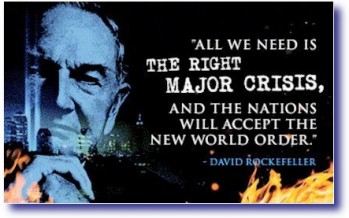 |
| "Wassenaar will make resistance via the Internet impossible!" |
This is another in our series of guest posts by subject matter experts. This post relates to a new threat to internet security and freedom of expression.
Open Letter Regarding
Wassenaar to the Department of Commerce and to Legislators,
Posted on May 26, 2015
[Background:
The Wassenaar Arrangement on Export
Controls for Conventional Arms and Dual-Use Goods and Technology is a
multilateral export control regime [MECR] with 41 participating states, to
include the USA. Wassenaar replaces
COCOM [Coordinating Committee for
Multilateral Export Controls], and is ostensibly less strict than COCOM
and focuses primarily on the transparency of national export controls and not
granting veto power to individual members over organizational decisions.
Wassenaar has come under fire from the IT
community since, in its current form, it will have “extensive harmful effects
on computer security research and defensive software”, potentially imposing
criminal penalties on software and security developers. The very credible author of this
article: Jonathan Adziarski, provides a
stirring case against Wassenaar.]
To Whom it May
Concern,
I am a published and
respected forensics expert who pioneered the very first forensic techniques to
extract data from the iPhone as early as 2008. Since then, I have spent
several years, and much of my time, assisting numerous law enforcement and
military agencies around the world, including our own. I’ve trained government
agencies in the US, Canada, and the UK, and I've trained law enforcement organizations from dozens of
our allies here at home in the US.
My work has been
validated by the NIJ/NIST. I have invested my time in providing free assistance
to many US-based federal and state agencies who have flown personnel into my
small town for help in the middle of the night.
Because of my
research and hard work, I’ve provided the necessary information to the rest of
the industry to be able to perform iOS forensics, and a vast majority of
today’s forensics solutions are founded upon my techniques.
I did all of this on
my own personal time, and in many cases on my own dime. The tools and
techniques I developed are by no means “intrusion”
tools; however, due to the excessively broad nature of the Wassenaar proposal, my services would fall under its regulations as
they bypass security mechanisms of devices and collect information from them.
As all of my research is done personally, I have no large company with lawyers
to address the impossible spider web of export regulations that would be
introduced by Wassenaar.
The current proposal,
as is, would harm far more than simply the information security industry, but would
also greatly damage the forensics industry and ultimately limit the quality of
tools available to law enforcement agencies for conducting lawful forensics. My
tools, as well as many commercial solutions, employ the use of exploits to
collect information from devices for purposes that serve law enforcement and
the greater good.
I sometimes only
privately release the source code to my own tools, as many commercial forensics
manufacturers have stolen it in the past, yet I continue to help the law enforcement
community. Wassenaar will do little
to accomplish the goals it set out to, and instead make it impossible for
security researchers like myself to further expand the base of knowledge by
contributing openly to the community – which goes far beyond this country’s
borders.
Had Wassenaar (as it is proposed today) been
in place in 2008, I would not have felt as though I could openly share my
research publicly without risk of prosecution, which would have deprived the
community as a whole – including the United States – of valuable information
that has led to the greater good.
I understand there
are certain nation states misusing intrusion tools to commit crimes. There are
also many law enforcement agencies within the United States who have misused or
abused my own tools and techniques to conduct questionable and potentially
illegal intrusions. We cannot simply un-invent technologies to prevent their
misuse, and unlike nuclear weapons, digital goods cannot be effectively
regulated; yet this is the tradeoff we make, to create these tools for the
greater good, knowing they may be abused.
This proposal stands
to only damage those looking to contribute to a better and more secure
community. Wassenaar has a deterrent
component, and at the heart of security research are many independent
researchers like myself who will simply stop contributing if there is a fear of
prosecution simply for sharing knowledge in the form of code.
Sharing knowledge is
not only a basic human right, but the only means by which we can become a
civilized society. Without knowledge and education, the greater good suffers.
Security researchers
share knowledge in the form of code, which serves as an illustration – a
description – of a problem that exists in a system. Even many published papers
will contain code as it is our language by which we can most effectively
communicate an idea. In addition to code, we create binaries of it to help test
our own systems for vulnerabilities and ensure the security of our user base. Wassenaar,
at its very core, attempts to regulate the ideas and knowledge we communicate
through code.
 |
| Dept of Commerce Bureau of Industry and Security |
In Wassenaar’s attempt to prevent the dissemination of intrusion software, it is, at the very core, creating too much of a fear of prosecution to any security researcher to even consider developing or sharing their research with those who would most benefit from it.
There are
alternatives to dealing with malicious nation states that do not involve creating
regulations and the fear of prosecution on honest, law abiding researchers
whose focus should be on their work, and not on being imprisoned by their own
country.
The day that I am prevented from sharing my knowledge freely with the world is also the day I stop sharing with all; it is the day the US declares they own the rights to my knowledge and what I do with it. That kind of power is far more dangerous than any intrusion tool.
The day that I am prevented from sharing my knowledge freely with the world is also the day I stop sharing with all; it is the day the US declares they own the rights to my knowledge and what I do with it. That kind of power is far more dangerous than any intrusion tool.
Subscribe to:
Posts (Atom)