|
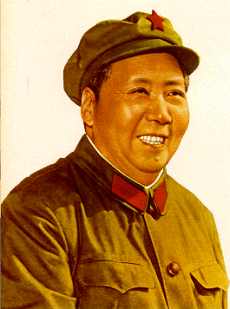
| I don't have a clue how Intelligence works; I just do what Valerie tells me to do! |
Click here for related article [ConsortiumNews.com]
We were rather appalled to see that John Brennan is
planning to disrupt the tried and true organizational structure of CIA to
create hybrid units "... focused on
individual regions and threats to US security...". This
reorganization would replicate the CIA CounterTerrorism Center and other
similar entities in the agency which began as ad hoc coordination points but morphed into bureaucracies of their
own – each competing with the next to demonstrate their incompetence.
Oddly, this reorganization concept grows out of
Brennan's own obscure role as a neophyte counter-terrorism analyst way back
when he was buried in a dark, corner cubicle at CIA, the object of derision and
ridicule by his fellow analysts and operators as well for his absence of
intellect and lack of a definable personality.
That was how we came to know him some years before
9/11 when the Counter-Terrorism desk in each Intelligence agency was the
designated repository for worthless and incompetent analysts on whom supervisors
were unwilling to spend the bureaucratic energy on to fire. We all assumed that they could do no harm in
such slots since the threat was negligible and all known terrorists and their
organizations were well-documented and monitored by other than “terrorism specialtists”.
With 9/11, Brennan, who had never predicted any
event with any more accuracy than his morning scheduled bowel movement,
suddenly was swept into a role of visibility and importance -- in spite of
having missed all the obvious indicators of the coming 9/11 event, and after
which he demonstrated that he had no clue as to the origin or nature of the
attack, nor of all the dots leading up to the attack.
However, he was the perfect stooge for both the Bush
and Obama Administrations to trot out to the public to mouth vacuous rhetoric
relating to "terrorism"
even though he could barely spell the term, much less come up with a strategy
to deal with the new "designated
enemy" for the US Defense contractors to invoice the government for
services and goods.
As background to Brennan's idiotic reorganization,
let's outline the CIA organization as it is currently structured [having been
morphed by bastardized reorganizations in past Administrations].
1) NCS [National Clandestine Service],
formerly the Directorate of Operations which manages US and international
espionage and covert operations.
2) Directorate of Intelligence, which expanded from several hundred analysts to several thousand today -- resulting
in a consequent regression in effectiveness due to stove-piping, internal
politics, and creation of inaccurate intelligence based on duplicative reports
which “confirm” earlier inaccurate
reporting.
3) The Science and Technology Directorate
which tracks and decides which new foreign technology to monitor and/or steal
through such entities as In-Q-Tel, a faux venture capital fund for innovative
products to be used by the CIA and NSA – without compensating the inventors.
4) The Support Directorate, which creates
facilities and logistical elements both in the US and internationally, launders
money, creates cover identities with local governments, and coordinates with
the private sector to provide support as needed.
[That may or
may not still be intact, but is likely degraded for lack of private sector
interface other than Defense contractors composed of ex-military and former
Intelligence executives.]
The key to these separate entities is that each one
functions separately from the others, and information on operations and
operational identities is available solely on a "need to know" basis. That's the way it's been since the
OSS was formed in World War II, and has remained ever since.
There are other minor and obscure -- but very
important operational elements, but, the four main entities give you an idea of
what the CIA looks like now.
[We'll discuss in another post how it used to be,
and how it has morphed into the bloated, ineffective organization that it is
today.]
So, what is it that Mr Brennan proposes.
Essentially, Mr Brennan sees no need for
compartmentation and has proposed to take personnel from each of the separate
directorates to form permanent '"fusion
cells" or "centers"
which combine analysts, operators, scientists, and support staff, all in one
big cubicle.
Such cells made sense in the past to coordinate
short-term operations on high priority, time-sensitive targets, but were
disbanded once the mission was accomplished -- otherwise, all those resources
would be wasted. It would be like creating the pit crew or talented
mechanics and technicians for a race car in the Indianapolis 500, and then
keeping the full crew idled on salary year-round with nothing to do but wait
for next year's race.
Mr Brennan, having no managerial experience in
either the public or the private sector, has no concept whatever of
organizational efficiency, and having no operational experience whatever, has
no concept of the need for compartmentation or internal security.
Traditionally, an analyst or other employee would
leave the CIA and have only a limited knowledge of the other elements, the
resources, or other employees. At best, a departed employee could
disclose either voluntarily or under duress only a limited amount of sensitive
information.
In Mr Brennan's bizarre reorganization, the
knowledgeability aspect of the most sensitive operations would be revealed to
an exponential number of personnel who would then be tied to multiple
directorates with both direct and indirect access.
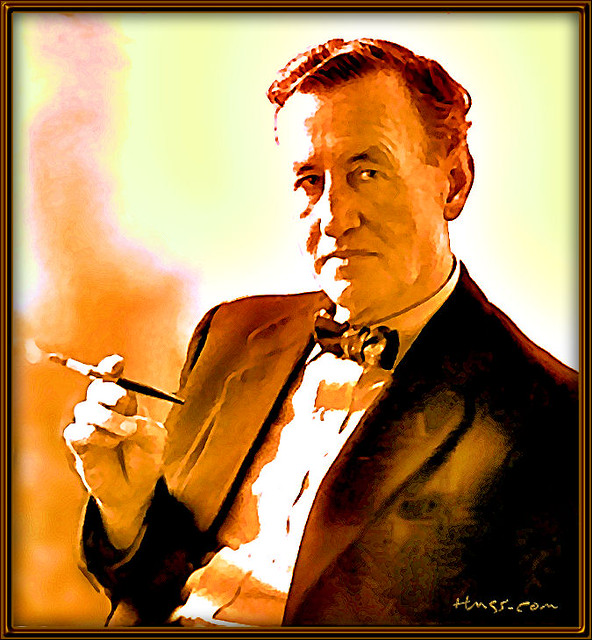 |
| Ian Fleming - Case Officer [Flickr] |
In essence, Case Officers [C/O] who have spent years building cover identities
and operational contacts would be the core of the new “fusion cell” along with the Regional [operations] desk
officer.
They traditionally worked hand in glove, with the
desk officer interfacing with the other directorates to provide analytical
support for tasking and refining of collection requirements; with the other
directorates developing logistical support [think of James Bonds “Q”
(for Quartermaster)] for cover
identities, tech gizmos, and extended support in the form of safe-houses, etc.;
and finally, there was a liaison branch to coordinate collection and
confirmation with other agencies such as NSA and the NRO [National
Reconnaissance Office].
For those security agents grinding their teeth now fearing that we’ve disclosed
sensitive methods, this is, and has been the process for all national
intelligence organizations for centuries.
So, there’s nothing new here, and you can put away your badges and
credentials and Miranda Warnings.
But, we digress.
Mr Brennan’s concept is to fully identify the C/O to all the supporting element
– all the time so they can all work hand-in-glove and have Kumbaya moments, year-round.
So, what’s the downside of these Fusion Centers?
Now, instead of the Clandestine Case Officers remaining anonymous, tasked and
supported only through their “handlers”,
the Regional Desk Officers and the Station Chiefs, no fewer than five new
personnel would be privy to the most intimate details of the C/O’s operations
and full identities of recruited assets and their families and networks, but
they would also be privy to the Station’s extended network of support assets,
safe houses, communications technology, cover stories, liaison networks.
That, of course, would be a major breach, but the full extent of this exposure
would come with the insertion of an enemy agent into the process.
Impossible you say?
 |
| DIA Analyst Montes |
Let’s take, for example, Ana Belen Montes who was recruited by Cuban
Intelligence [CuIS] in 1985 through
the auspices of CuIS agent Marta Rita Velazquez – a graduate of Georgetown University Law
School and the Johns Hopkins School of Advanced International Studies and employed with the US State Department. Velazquez recruited Montes [and allegedly a
number of other Cubans] and facilitated her hiring as an Intelligence Analyst
at the Defense Intelligence Agency [DIA] – successfully passing a polygraph
examination. Notably, Montes came to DIA from the Department of Justice; her brother and sister were FBI officers, and her former boyfriend, Roger Corneretto, was an Intelligence officer at the Pentagon specializing in Cuba. As a DIA analyst, she visited Special Forces covert facilities, one of which was attacked shortly after her visit in 1987.
 |
| State Dept Officer Velazquez [El Doario] |
Velazquez reportedly escorted Montes to Cuba for
spy-craft training to exploit her exposure to the sources and methods employed
at the newly formed DCS [Defense
Clandestine Service], as well as those for US Military Intelligence
organizations.
We met Montes when she was introduced to us by the DIA Latin America Division Chief as a potential DCS Latin America Desk
Officer. We dismissed her as unqualified
and recommended that her background investigation be reopened since the questions
she raised in the interview process seemed far too precise for a new analyst. Nonetheless, she was retained by DIA’s
analytic division and became a rising star, privy to all clandestine operations
through raw reporting – and her role as collection management and tasking.
A well-placed penetration agent we had recruited, whose access was unique,
became the subject of tasking by Montes’ desk, and within a remarkably short
time, the asset was identified and murdered - apparently identified by means of his disclosed access.
Subsequently, we increased the restrictions on the identity and
placement of recruited assets assuming there was a leak in the system – most
likely in the Analyst Division -- although we did not rule out a penetration of the CIA.
Nonetheless, countless other operations in the Caribbean and in Latin America
were compromised before she was arrested in 2001. During her 16 years tenure in DIA, she had extensive
access to sensitive information identifying recruited assets in Latin America, Case
Officers and CIA chiefs of station, support networks, logistics, and sensitive
communications systems.
The security element had completely failed.]
But, to return to our commentary, Montes was the spy that was “caught”.
Meanwhile, we have to assume countless others who have passed polygraph
exams are still fully operational throughout the intelligence community which
now is home to thousands of analysts and support personnel – few of whom have
been appropriately vetted. Add to these
vulnerabilities the growing number of Intelligence and Defense Contractors now
populating the Intelligence Community.
Any confidence in the security of the Clandestine Service [Defense or CIA] at
this point has withered; exacerbating these vulnerabilities with Brennan’s Fusion Cells further exposes sources and
methods on an exponential basis.
It's bad enough to have our intelligence operations broadcast from the Oval Office,
but let’s not make our national security sieve into a security sluice.
[DISCLAIMER: We retired from the Service in 1990, 11 years before Montes was identified and arrested; our requests for increased monitoring of Montes went ignored and unfulfilled.]